Clinical Concerns
- Post-release overdose risk due to reduced tolerance
- Limited evidence for improved long-term outcomes
- Potential chilling effect on emergency overdose response
Bill 48 has passed — Saskatchewan must build voluntary care capacity before coercive intervention is implemented.

Saskatchewan deserves an addictions response built on compassion, evidence, immediate access to voluntary care, and long-term recovery infrastructure.
Saskatchewan's Compassionate Intervention Act expands the state's authority to detain individuals for addictions treatment. We believe that authority must not move ahead of the care system meant to support it.

We can build a system where help arrives in hours — not months — and where every stage of recovery has somewhere to go next.
What too many Saskatchewan families experience now.
What evidence-based, voluntary infrastructure can look like.
Each stage exists because the one before it cannot work alone. Skip a link and people fall through.

Same-day, low-barrier access to detox the moment a person is ready.

Evidence-based care alongside lived-experience peer support.
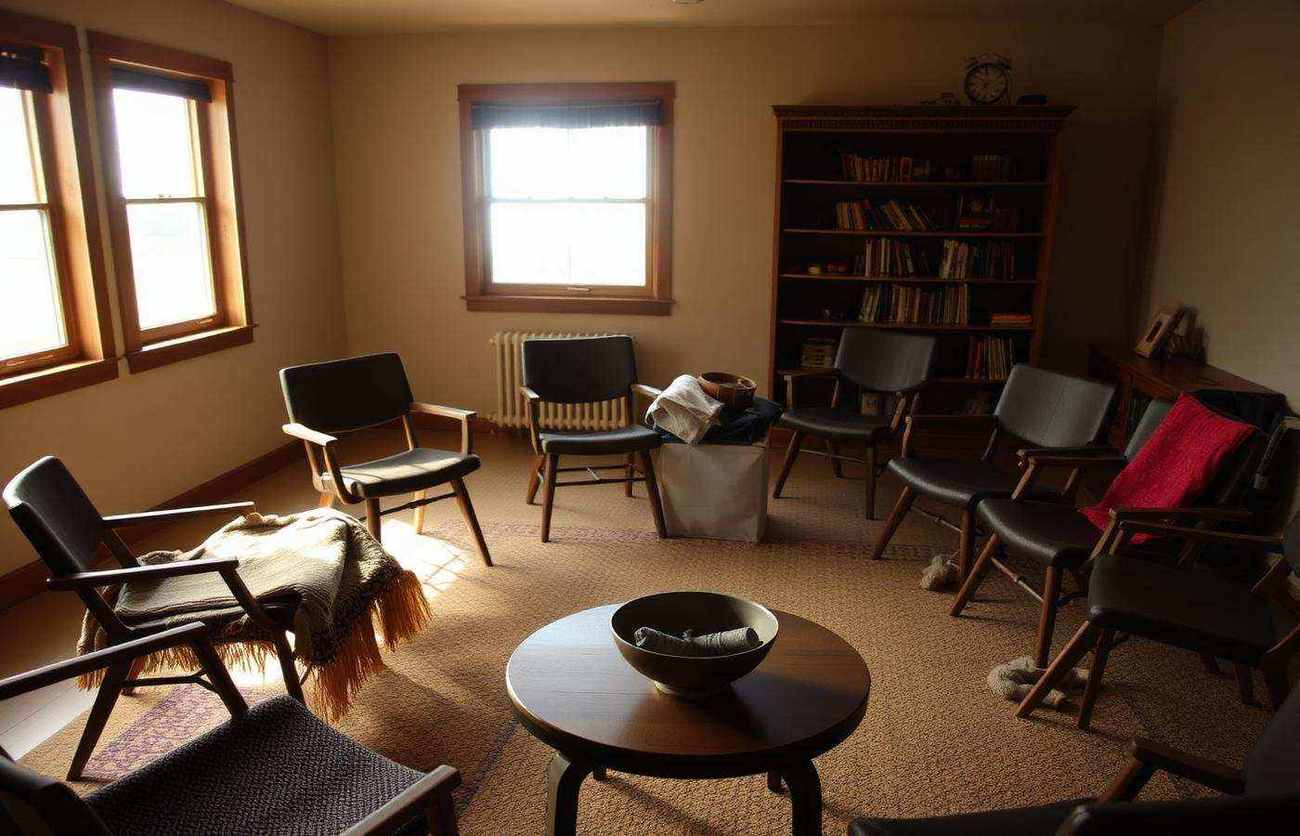
Culturally safe healing designed and governed by Indigenous Nations.

Transitional sober living that bridges treatment and independent life.

Stable housing, work, and belonging — the foundations of lasting recovery.
Same-day detox and intake — care available the moment a person is ready.
Transitional sober living that bridges treatment and a stable, independent life.
Stable housing as the foundation that makes sustained recovery possible.
Peer-led, neighbourhood-rooted supports that meet people where they live.
Culturally safe, community-governed care designed and delivered by Indigenous Nations.
Our position is grounded in peer-reviewed studies, government reports, and economic evaluations. A small sample of the consensus evidence below — the full library has over 90 entries.
The Lancet Public Health (ICES / Unity Health Toronto)
Both SOS and methadone groups showed dramatic, statistically significant declines in overdoses, hospitalizations, and aggregate healthcare costs; SOS retained a more medically complex population that frequently drops out of methadone.
Population-based matched cohort of 856 safer opioid supply (SOS) recipients vs. matched methadone initiators, tracking overdose, ED use, infections, and retention over multiple years.
Read source
Canadian Journal of Addiction
Only 7 of 42 studies showed improved outcomes vs. voluntary controls, mostly limited to short-term retention. Only one study showed a sustained post-discharge reduction in substance use.
Systematic review of 42 global studies on involuntary and mandatory substance-use treatment, evaluating substance use, retention, and recidivism outcomes.
Read source
BMJ
Methadone reduces all-cause mortality risk ~3x compared to no treatment.
Pooled cohort analysis of 122,885 people. All-cause mortality is roughly one-third to one-half lower during methadone or buprenorphine treatment than out of treatment.
Read source
Mental Health Commission of Canada
Participants spent 73% of their time in stable housing vs. 32% for treatment as usual.
Largest pan-Canadian RCT of Housing First (n=2,148, 5 cities). Conclusively shows Housing First works for people experiencing homelessness and mental illness.
Read source
We are a grassroots, citizen-led campaign asking Saskatchewan to prioritize building real recovery infrastructure before involuntary treatment powers are enacted under the Compassionate Intervention Act.

"Real recovery begins when help is available the moment someone is ready."
Our mission
We are advocating for
The questions Saskatchewan neighbours, families, and journalists actually ask us. Still curious? Use the assistant below or get in touch — we'd rather have the conversation than leave you guessing.
Bill 48 — Saskatchewan's Compassionate Intervention Act — creates a legal framework to detain and treat people with severe addiction without their consent. It has passed the Legislative Assembly. We are asking that implementation be paused until voluntary care infrastructure (detox, treatment beds, recovery housing, Indigenous-led care) is actually in place across the province.

Every signature is collected face-to-face — by neighbours, for neighbours.
The petition is collected in person, in your community. Drop by a hosted signing event, invite a canvasser to your door, or offer your business as a signing location.
Direct, respectful constituent letters are one of the most effective tools in Saskatchewan politics. Enter your postal code and we'll find your MLA and draft a letter you can email, print, or adapt in your own words.
Personalize the tone and add your details. Edits made in the box below are saved when you copy or email.
Personalize the letter in your own words wherever you can — staff weigh authentic constituent letters far more heavily than form letters.
Real change happens when neighbours show up for each other. There's a role here that fits the time, skills, and energy you have to give.
Working supervisor on every shift. Runs briefings and debriefs, mentors new volunteers, secures petitions, and submits the same-day shift report.
Collects signatures, staffs events, and represents the campaign. Targets one shift per week and certification within 30 days of first shift.
Tell us a little about you. Most people start as a Volunteer; experienced leaders can apply directly for Team Leader. We'll match you with a coordinator in your community within 5 business days.
Voluntary Treatment First Saskatchewan is a grassroots coalition of concerned residents, healthcare workers, advocates, family members, and supporters of evidence-based recovery solutions.
We are nonpartisan. Our work is public-interest advocacy rooted in the conviction that better care infrastructure saves lives.
Our values
Briefings, evidence summaries, legal analysis, and downloadable campaign materials — organized for advocates, journalists, and policymakers.
Open the full Evidence LibraryBill 48 overview
What the Compassionate Intervention Act does and who it applies to.
BriefingClinical evidence
Why retention in voluntary treatment is the strongest recovery predictor.
Research summaryClinical evidence
Elevated mortality following discharge from coerced settings.
Evidence briefConstitutional analysis
Section 7 and 9 implications, and the need for transparent safeguards.
Legal analysisIndigenous perspectives
Community-governed care frameworks across Saskatchewan and Canada.
Policy paperRecovery infrastructure models
Detox → treatment → housing → reintegration: what each stage needs.
Policy proposalTreatment system capacity research
Current wait times, bed counts, and regional gaps.
Data briefBill 48 overview
Official campaign petition page for community signature drives.
DownloadWhether you're a community member, journalist, healthcare worker, or elected official — we'd like to hear from you.
hello@voluntarytreatmentfirst.ca
Facebook group
Voluntary Treatment First SK
Petition page
View the active petition
Community updates
Subscribe for monthly updates
Support the campaign
A donation option is coming soon. For now, the most valuable thing you can give is your signature and your voice.